
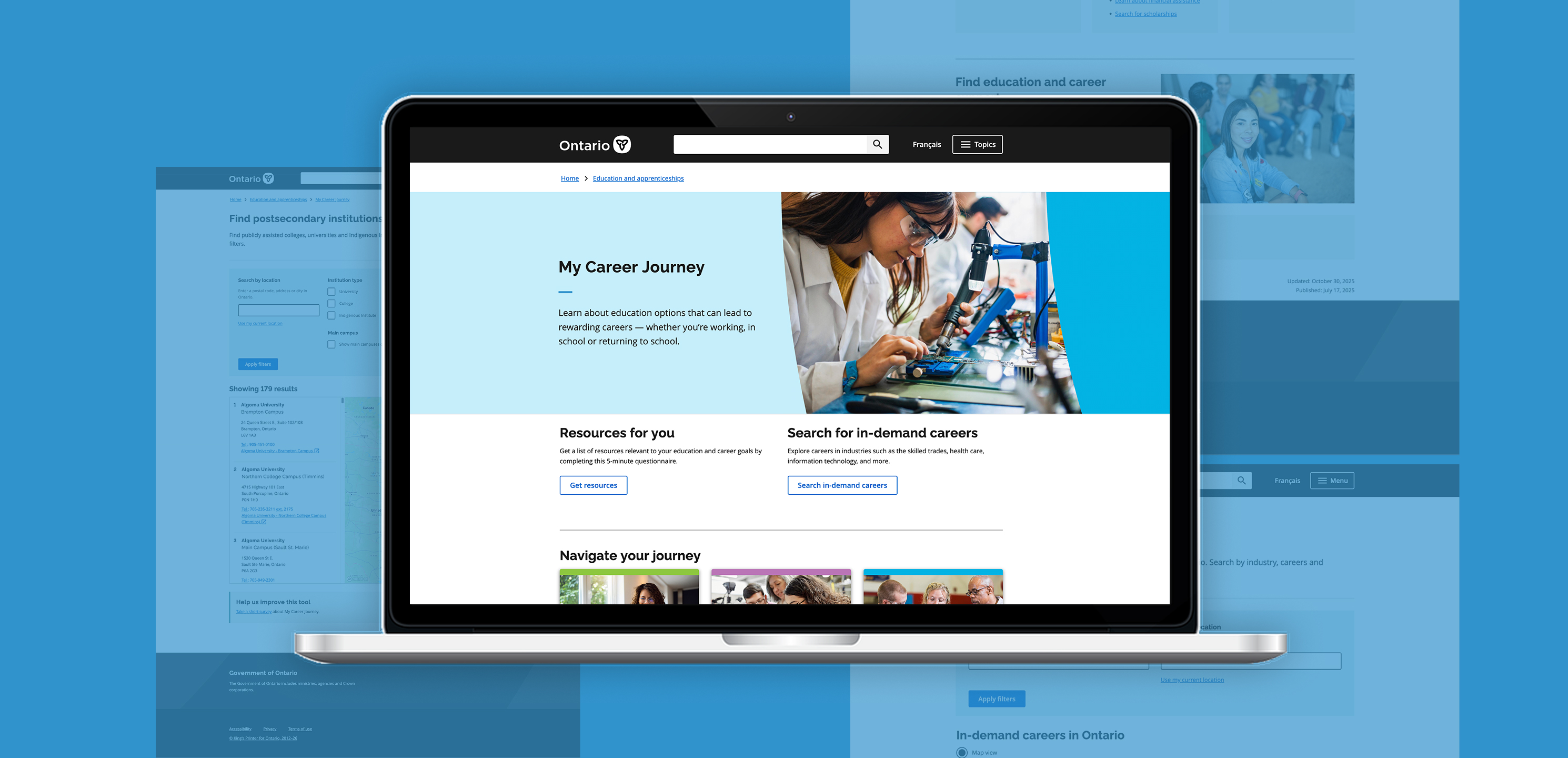
This project aimed to streamline how learners explore education and career pathways. At the time, Ontarian's had to search across scattered sources to find the information they needed.
Our goal as designers on this project was to align the product as closely as possible with user needs while working within tight timelines and shifting business priorities.
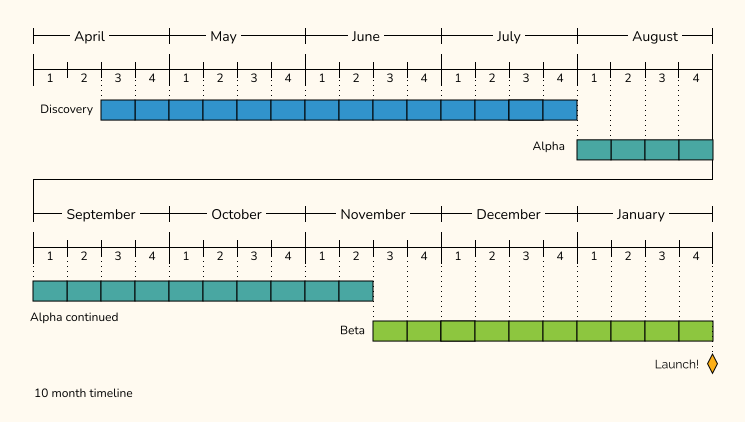
Through the Digital service design lifecycle, the following map illustrates four phases of the project from the initial kick-off all the way to launching My Career Journey.

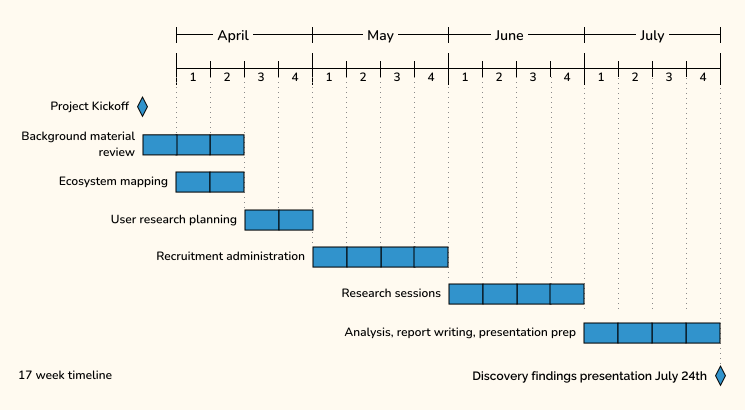
On this project, I worked alongside another Senior UX Designer and two UX co‑ops in a fast‑changing environment. Because priorities shifted often, our responsibilities frequently overlapped. I might begin an activity and then hand it off as new needs came up. My unique contribution was acting as a flexible generalist who could step into whatever role the project required. This included leading in‑person guerrilla user research testing and mentoring co‑ops through tasks such as research recruitment.
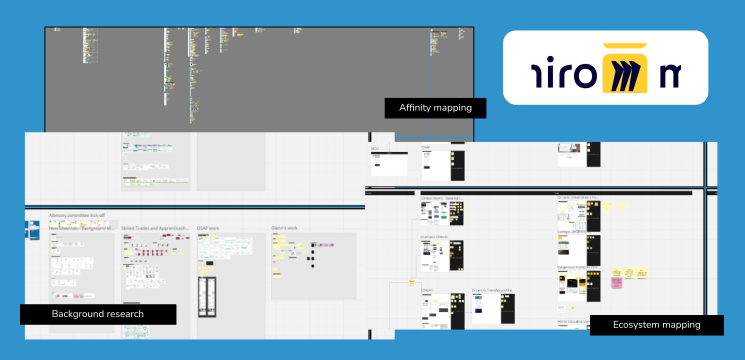
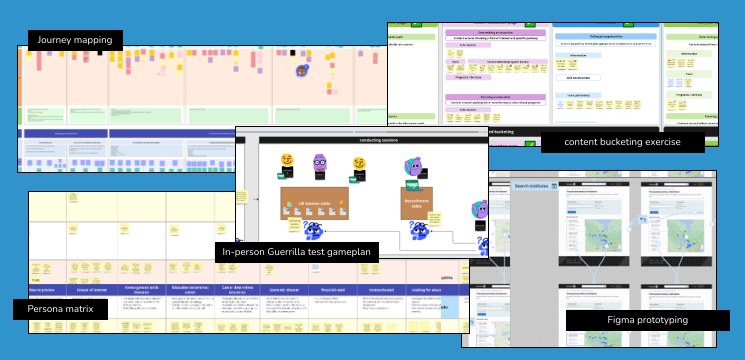
It is the end of discovery, and our stakeholders need a 3–4 slide summary for executive buy‑in. I take on the task of distilling our complex journey map into a simple, clear visual. After a few iterations, I create a version that captures the core experience. These moments reinforces how important it is to refine my skill in tailoring insights for different audiences.
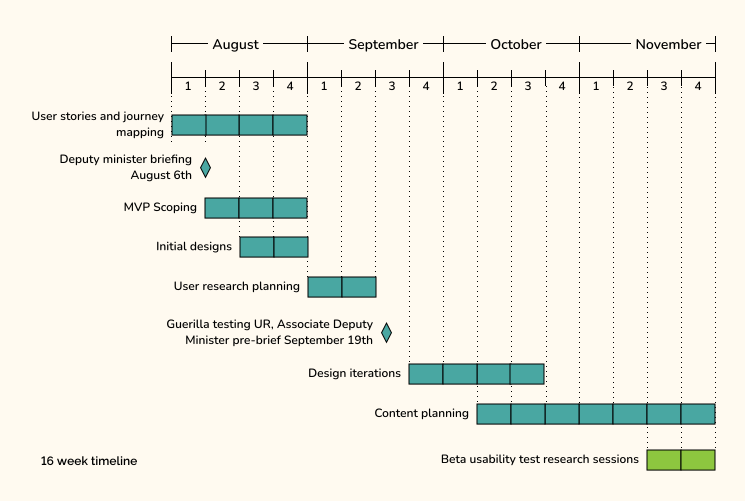
Early in Alpha, we are designing our first concepts when stakeholders request quick user insights for an unexpected executive briefing two weeks away. With the other senior designer on vacation, I take the lead in planning and running a guerrilla test within a week with four co‑ops, followed by a rapid analysis workshop. The experience reinforces the value of fast validation and sharpens my ability to stay organized under pressure.
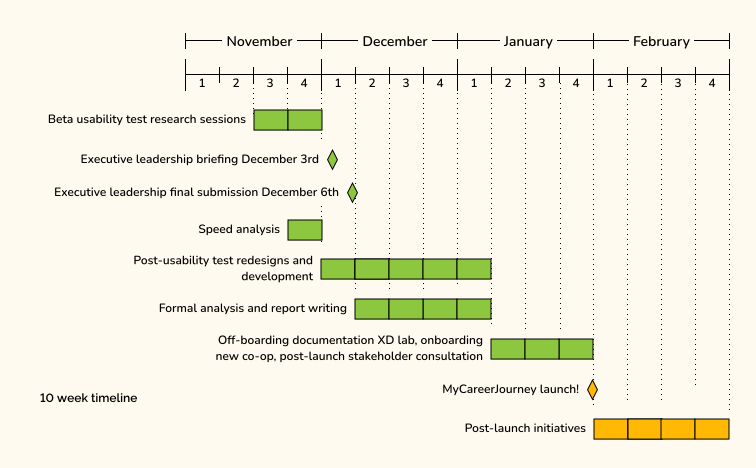
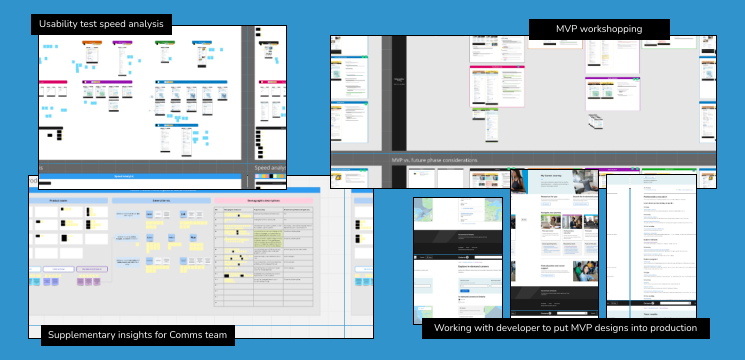
It is almost the end of Beta, and we have just wrapped usability testing on the high‑fidelity prototype. To give our developer maximum time for launch, I lead an MVP workshop with the product manager, using a yes‑or‑no approach to decide what is for launch and what moves to later phases. The alignment lets us hand off designs quickly, and collaborating with the developer helps us catch design considerations we had not anticipated. It is a great reminder of the value of strong interdisciplinary collaboration.
Following the launch, I led post‑launch UX initiatives to drive further product improvements, including workshops, multi‑fidelity design work, and ongoing user research. I synthesized qualitative and quantitative insights to guide decision‑making and collaborated closely with stakeholders and developers to ensure solutions met both user and business needs. During this time, I also supervised and mentored a UX co‑op student, supporting their professional growth throughout the engagement. Full case study of the live phase coming soon!


